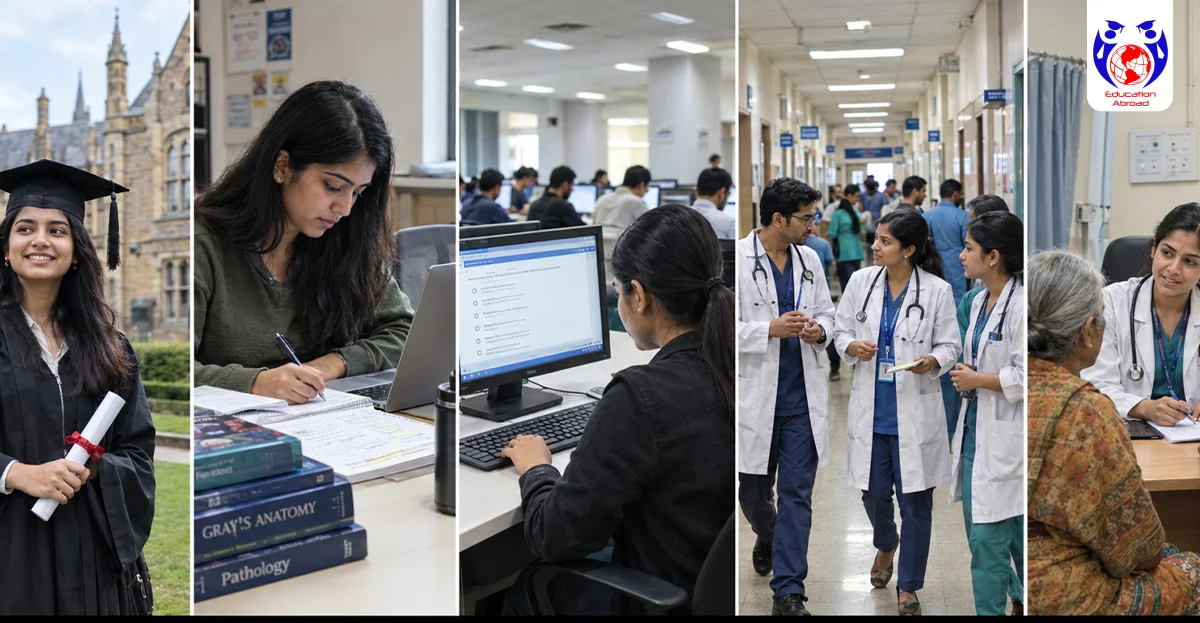

Indian students planning to study abroad received promising news as Russian President Vladimir Putin arrived in New Delhi to meet Prime Minister Narendra Modi for the 23rd India-Russia Annual Summit. While the summit primarily focuses on defence, trade, and technology, education emerged as a key priority, with both nations emphasizing academic collaboration, student mobility, and long-term cultural exchange.
The visit has captured nationwide attention not only for its strategic significance but also for the opportunities it opens for students seeking higher education in Russia, particularly in fields such as medicine, engineering, IT, and nuclear sciences.
One of the developments related to the visit made by Putin is the opening of a new branch of the Russian Education Agency in New Delhi. The centre will:
This growth will facilitate easier access to studies in Russia and increased transparency, as well as less reliance on agents that cannot be trusted, and a better method of assisting students.
During interactions and media remarks, President Putin acknowledged India’s global standing and praised the potential of its youth. He highlighted that India and Russia share an “exceptionally warm relationship,” making educational and cultural exchanges more meaningful.
The words of Putin indicate the desire of Russia to receive an increasing number of Indian students and establish long-term academic relationships based on mutual respect and common values.
This year’s summit places strong emphasis on emerging fields that align with student interests:
New Delhi remains under tight security due to the high-profile nature of the summit. Several central routes have traffic restrictions and diversions, with authorities urging commuters to use metro services and follow real-time updates.
For Indian students planning to study abroad, the developments from today’s summit indicate:
The day is expected to conclude with a joint announcement outlining new cooperation roadmaps, including student-centric initiatives.