
Choosing the best country for MBBS abroad is no longer only about tuition fees or hostel photos. For an Indian student, the degree is useful only when it converts into a licence to practise in India. That single test, clearing the screening examination conducted by NBEMS, is what separates a good decision from an expensive one. Every year, thousands of Indian graduates return home, and the pass percentage varies sharply depending on where they studied and how seriously that university treated clinical training. If you are shortlisting destinations, start by studying pass trends before you look at brochures, and go through our detailed guide on MBBS abroad to understand how each destination is structured.
The Foreign Medical Graduate Examination is a qualifying test, not a ranking exam. A graduate must score 150 out of 300 to pass. Nationally, the FMGE success rate has historically stayed low in most sessions; only a fraction of the appearing candidates clear it. This is not because foreign degrees are weak, but because a large number of students enrol in universities that offer weak clinical rotations, limited patient exposure and no structured Indian-syllabus coaching.
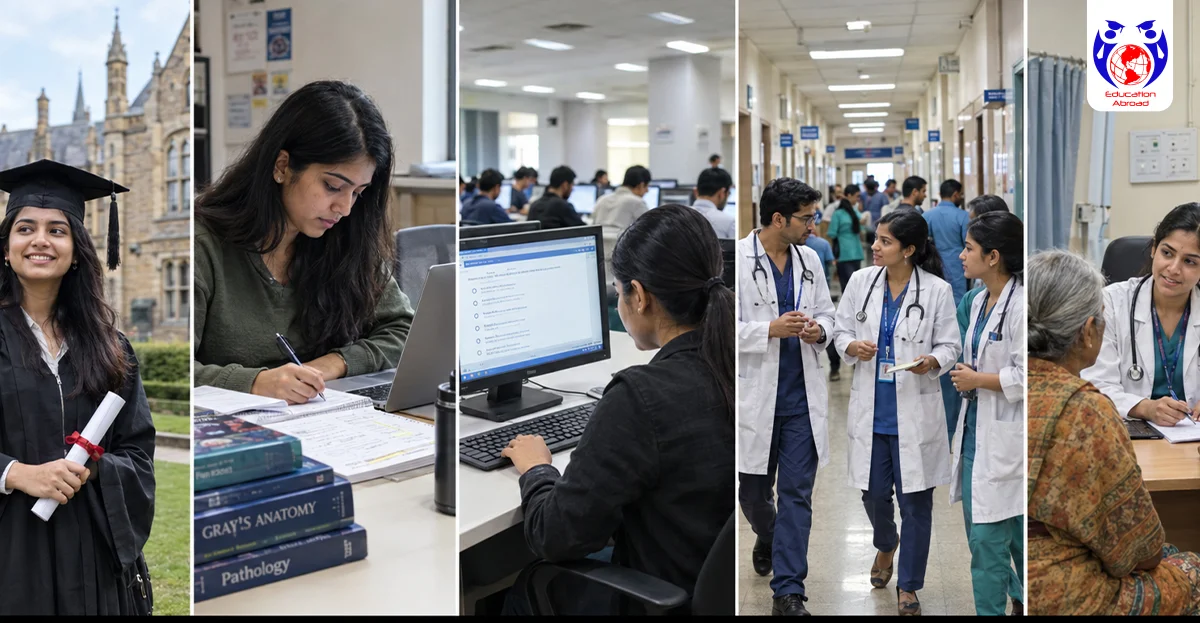
The NExT success rate will matter even more going forward. The National Exit Test, notified under the National Medical Commission Act, is designed to replace FMGE as the common licensing route for both Indian and foreign medical graduates. When it is fully implemented, foreign graduates will be assessed on the same paper as Indian MBBS students. Universities that already align their teaching with the Indian curriculum will therefore give their students a measurable advantage.
You can verify recognition status and licensing rules directly on the National Medical Commission website before paying any fee.
Country-level averages hide a lot. Two universities in the same city can produce very different results. Look for these factors:
The table below gives a practical MBBS abroad comparison for Indian aspirants planning admission in the 2026 intake. Approximate figures are indicative and should be re-checked against the latest NBEMS result notification.
|
|
|
|
|
|
|
|
|
|
|
|
|
|
|
|
|
|
|
|
|
|
|
|
|
|
|
|
|
|
|
|
|
|
|
|
|
|
|
|
|
|
|
|
|
|
|
|
Reading the table honestly: Bangladesh generally reports the strongest outcomes because its syllabus, teaching language, and patient profile mirror India. Russia and Georgia follow, backed by long-established state universities. Kyrgyzstan and Kazakhstan remain the most affordable, but outcomes swing widely from one campus to another, which is exactly why university selection matters more than country selection.
There is no single answer that fits every student. Match the destination to your priority:
Before finalising, confirm that the university appears in the NMC-recognised list, check the duration and internship structure, and ask for the last three years of Indian-student results in writing. Explore our country-wise pages such as MBBS in Russia and MBBS in Barbados for fee structures and eligibility.
For MBBS abroad 2026, the smartest applicants are reading result data, not advertisements. The best country for MBBS abroad is the one whose universities give you real patient exposure, English-medium teaching, and a syllabus that prepares you for FMGE and the upcoming NExT from day one. Compare outcomes, verify recognition, and choose deliberately. If you would like a shortlist built around your NEET score and budget, talk to our counsellor. Guidance is free, and there is no obligation.
Bangladesh has historically reported one of the strongest pass percentages, largely because its curriculum and clinical case profile closely match India's.
Yes. As per the NMC Act, the National Exit Test is intended to become the common licensing examination. Students should follow official NMC notifications for implementation dates.
Not necessarily. Low fees are fine provided the university is NMC-recognised and offers full English-medium teaching with an attached teaching hospital.
Yes. Qualifying NEET UG is mandatory for Indian students seeking a foreign medical degree and later a licence to practise in India.