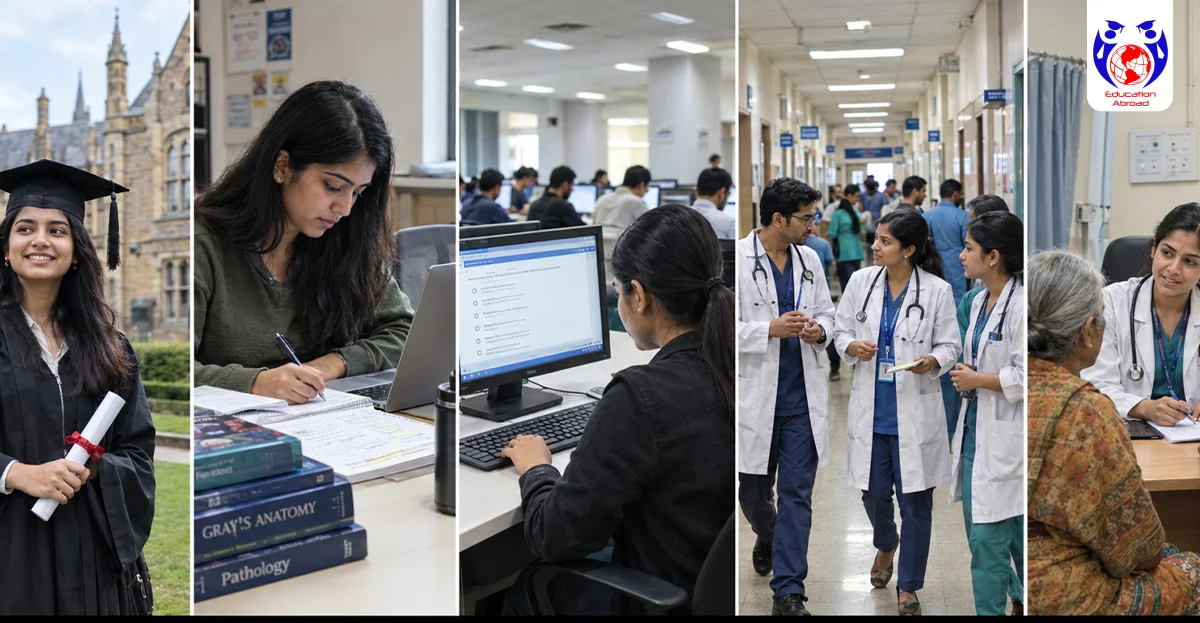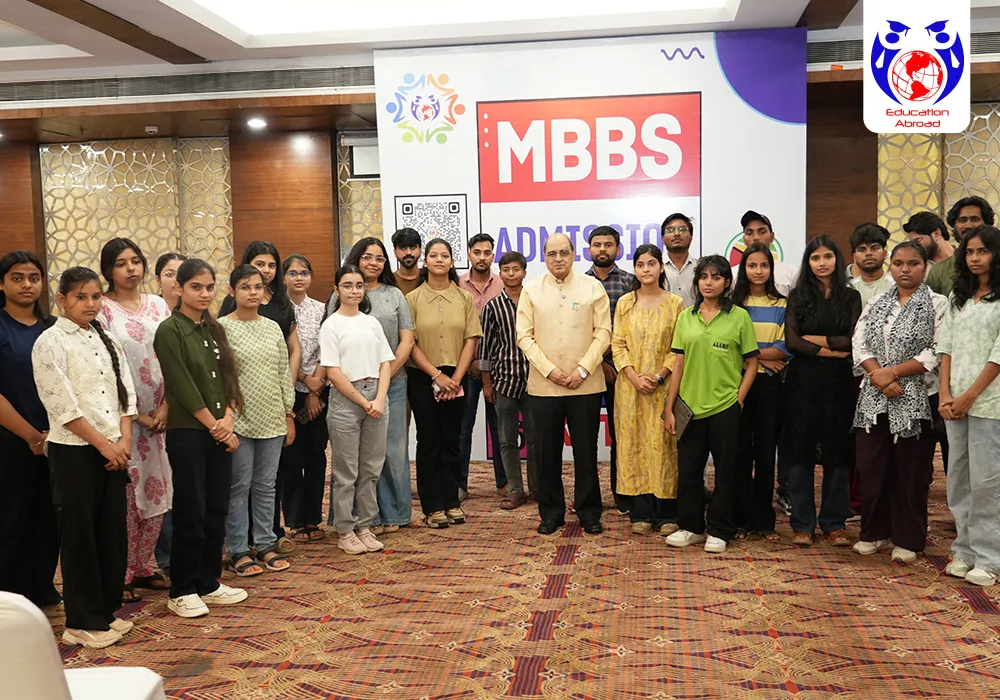
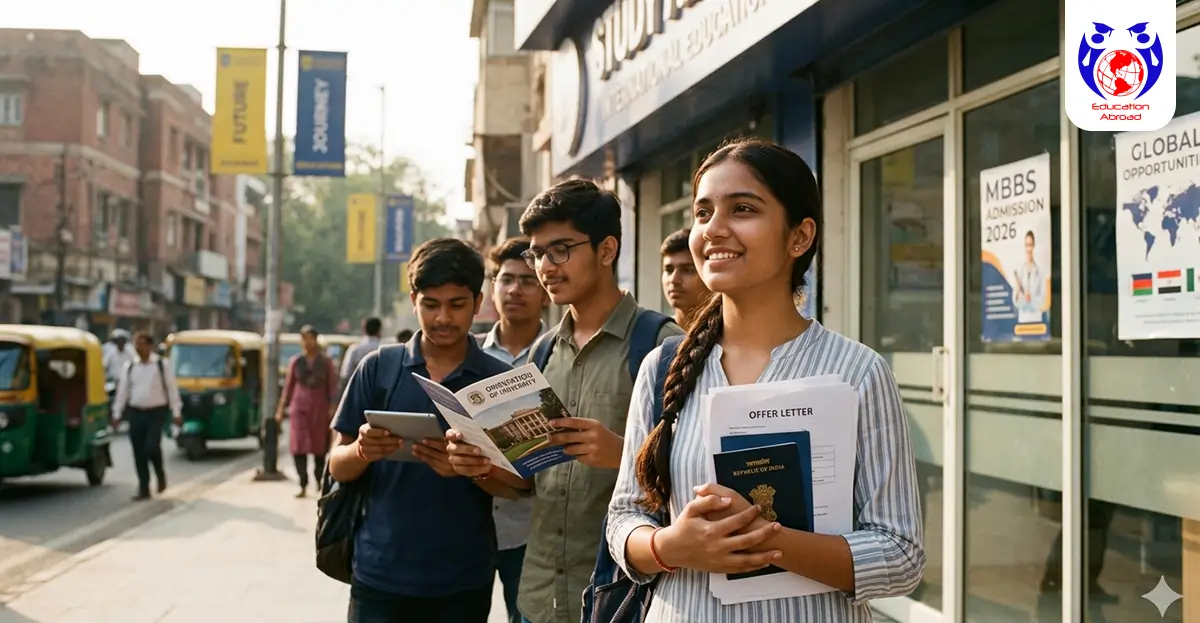
Choosing to pursue MBBS abroad is a life‑changing decision for many Indian students in 2026. With intense competition for medical seats in India and limited availability of government MBBS spots, studying abroad has become a popular and cost‑effective alternative. This comprehensive guide walks you through every step of the process so you can make informed decisions and prepare smoothly for your medical journey overseas.
Thousands of Indian students opt to study MBBS abroad each year because of factors such as limited seats in India and the high cost of private medical colleges at home. Moreover, studying medicine overseas offers affordability and exposure to international healthcare systems.
Many popular destinations for MBBS overseas, such as Russia, Kyrgyzstan, Kazakhstan, and Georgia, provide quality education at a cost considerably lower than many private colleges in India.
Also Read: Documents Required for MBBS Abroad in 2026: Complete Checklist for Indian Students
Let us now understand the full MBBS admission abroad process for 2026.
Before applying for MBBS overseas, students must ensure they meet the eligibility criteria. The common requirements for Indians are as follows:
These criteria ensure that the student is academically eligible for medical education and meets regulatory guidelines.
The next step in the MBBS admission abroad journey is selecting the right university. Since not every medical university offers quality education, careful research is essential.
Students usually compare several factors, such as:
Many students prefer universities that are internationally recognized and have well-equipped hospitals for clinical exposure.
Once a university is selected, students must submit their application along with the required documents. This is one of the most important stages of the MBBS abroad admission process.
Typical documents required include:
After the documents are verified, the university processes the application and evaluates the student's eligibility.
The university issues an official admission or offer letter after reviewing the submitted documents if the student meets the eligibility requirements.
The admission letter confirms that the student has been accepted into the MBBS overseas program and reserves their seat at the university.
Students need to confirm their admission by paying the initial registration or tuition fee required by the university after receiving the offer letter.
This payment, which is charged, includes:
Completing this step officially secures the student's place in the MBBS abroad program.
The university issues an official invitation letter after confirming admission. This document is necessary for applying for a student visa.
The invitation letter is generally issued by the university or the education ministry of the host country. It serves as proof that the student has been accepted for MBBS admission abroad.
Once the invitation letter is received, students can apply for a student visa at the embassy or visa center of the respective country.
This is what the visa application process usually requires:
Visa processing typically takes a few weeks, depending on the country and documentation.
Students can begin preparing for travel after the visa is approved. This stage includes several important steps, which are as follows:
Students should always carry their original documents in their hand luggage during travel.
Students must complete their final university registration after they arrive in the destination country. This process usually happens within the first week after arrival.
The university typically assists students with:
These steps officially mark the beginning of the student's MBBS overseas academic journey.
When planning your MBBS abroad journey:
Pursuing MBBS abroad is a practical and rewarding option for Indian students aspiring to become doctors, especially if securing an MBBS seat in India proves difficult. Start early and always prioritise accredited universities and legal compliance.
If you are considering MBBS overseas and need expert assistance in selecting an NMC-approved medical university, you can reach out to The Education Abroad for comprehensive counseling and admission support to begin your medical journey overseas.
Q.1 Which country is best for MBBS abroad?
Answer: Russia, Kazakhstan, Kyrgyzstan, China, Georgia, the Philippines, and Germany are often considered popular choices for affordable or quality medical education, while the USA, UK, and Canada offer top-tier but costly programs.
Q.2 Which country is safest for MBBS?
Answer: For decades, Russia has remained a popular choice for Indian medical aspirants. It combines affordable education, strong academic standards, and globally recognized universities. With 30+ NMC-approved institutions, it offers reliability few destinations match.
Q.3 Do I need to know a foreign language for MBBS?
Answer: MBBS programs in leading destinations like Russia are typically taught in English, so you don’t need prior knowledge of a foreign language. Additionally, students learn the Russian language during the course to communicate effectively during clinical practice.
Q.4 Is NEET compulsory for FMGE?
Answer: Qualifying NEET-UG is mandatory for Indian citizens and OCIs seeking admission to MBBS programs abroad. The NEET score also serves as eligibility for the Foreign Medical Graduate Examination (FMGE), which is required to practice medicine in India after completing MBBS overseas.
Q.5 Should Indians go to study abroad?
Answer: Studying abroad gives Indian students the chance to experience varied educational approaches, gain international perspectives, and engage with multicultural communities. It not only enhances academics but also promotes personal growth, career skills, and cultural understanding.