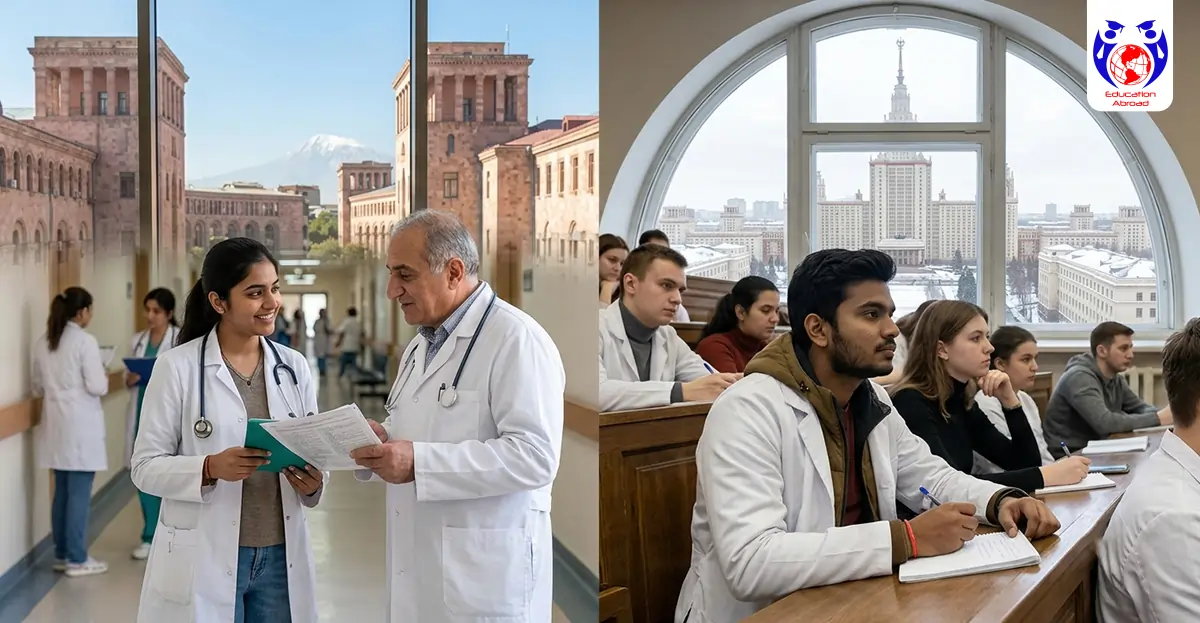
One of the critical decisions while studying medicine abroad is choosing the correct destination for the study program. Even though several countries provide affordable opportunities to obtain an MBBS degree abroad, the popularity of MBBS in Armenia and Russia remains at its peak because of their international reputation, affordable costs of studies, and simple admission procedure.
But the choice of destination is not only about the annual tuition fee. In addition to it, a student should assess the quality of education provided by the institution, its recognition, clinical experience, language of instruction, overall cost of living in the chosen country, safety, and adherence to the NMC requirements. According to the Foreign Medical Graduate Licentiate (FMGL) Regulations, there are a number of requirements that must be met by the foreign medical program in order to allow Indian students to practice in India.
This detailed comparison will help you to determine the crucial differences between MBBS in Armenia and Russia.
Each year, many Indian students consider studying MBBS abroad due to the scarcity of government medical seats and expensive private education in India. Armenia and Russia have become popular places for Indian students to study medicine since they provide world-famous medical universities, advanced facilities, and inexpensive education in comparison to other nations.
Although both countries provide quality medical education, they differ in several important aspects, including:
Which country offers better overall value for my medical career?
That perspective helps students choose the right university based on long-term outcomes rather than marketing claims.
|
|
|
|
|
|
|
|
|
|
|
|
|
|
|
|
|
|
|
|
|
|
|
|
|
|
|
|
|
|
|
|
|
|
|
|
Key Takeaway: Choosing between Armenia and Russia should not be based on tuition fees alone. The quality of education, practical training, and compliance with NMC regulations are equally important factors.
One of the biggest concerns for Indian students planning to pursue MBBS abroad is whether their degree will support future registration in India.
Instead of assessing only the country, students need to assess the particular university as well as the medical program in question. As per the National Medical Commission’s Foreign Medical Graduate Licentiate Regulations, the student needs to make sure that the course fulfills all the stipulated requirements of education and training, which include teaching in the English language, length of the program, internship, and eligibility to acquire a license to practice medicine in the particular country.
Therefore, before taking admission, students should always verify:
One of the primary reasons why Indian students compare Armenia vs Russia MBBS is affordability. While both destinations are considered more economical than many private medical colleges in India, students should compare the total cost of education rather than tuition fees alone.
The overall budget should include:
Many students focus only on annual tuition fees and overlook these additional expenses, which can significantly affect the total budget over six years.
|
|
|
|
|
|
|
|
|
|
|
|
|
|
|
|
|
|
|
|
Key Takeaway: Instead of choosing a university based solely on tuition fees, compare the complete cost of education over the entire duration of the course.
Practical experience is an important part of the development of practical skills in the field of medicine. Although both countries offer clinical training, the quality of the clinical experience will be determined mainly by the particular medical university and its affiliated hospital, patient flow, and curriculum rather than the country.
The Russian government-funded medical universities have teaching hospitals with a long history, which allows students to gain experience in the practice of clinical training. The same applies to Armenia, where medical universities offer practical training in affiliated hospitals.
Before selecting a university, students should verify:
These factors directly influence the learning experience and future clinical confidence.
Most Indian students prefer English-medium medical programs while studying abroad. Both Armenia and Russia offer English-medium MBBS programs at several universities; however, students should confirm the language of instruction directly with the university before taking admission.
According to the National Medical Commission's Foreign Medical Graduate Licentiate (FMGL) Regulations, the medical course must be conducted in English for students who wish to pursue medical registration in India after graduation.
At the same time, learning the local language remains beneficial because it helps students:
Developing basic language skills can enhance both academic performance and practical learning throughout the course.
Apart from academics, students should also consider the overall learning environment before deciding where to study MBBS abroad.
Both Armenia and Russia welcome international students and offer hostel facilities, libraries, laboratories, sports complexes, and student activity centres. However, the overall experience may vary depending on the university and city.
Some factors worth considering include:
Russia generally has a larger Indian student population because it has been a preferred destination for Indian medical aspirants for many years. Armenia, on the other hand, offers a comparatively smaller academic environment, which some students may prefer for a closer-knit campus experience.
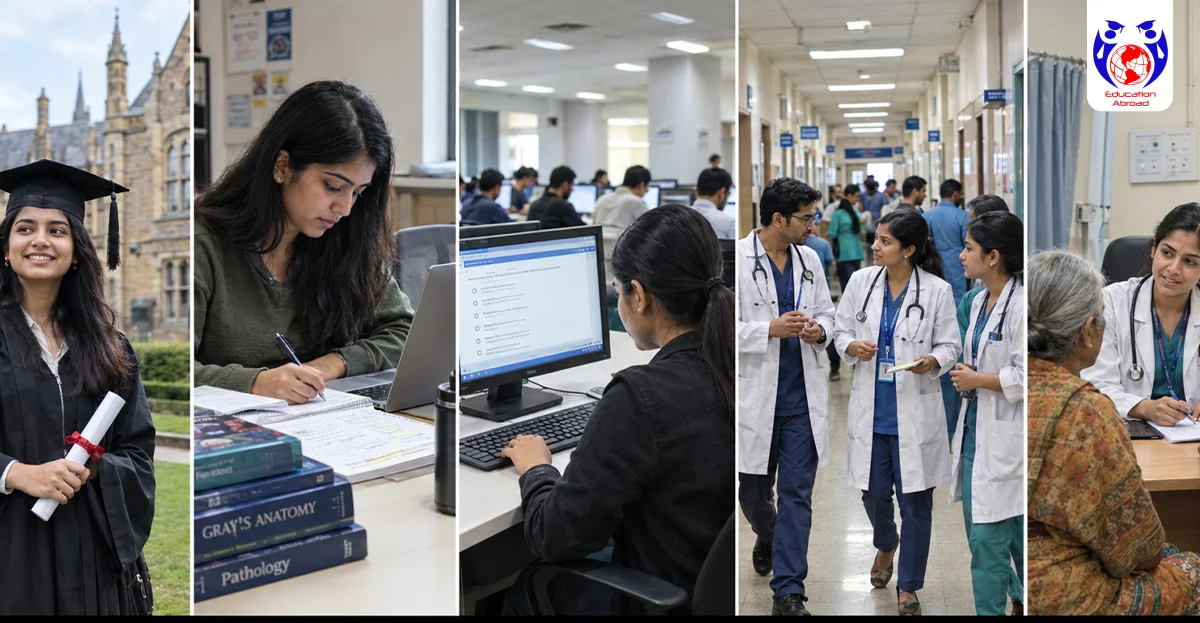
While considering the choice between MBBS in Armenia and MBBS in Russia, one of the essential things that should be considered is the future career prospects after completion of studies. Even though both countries provide international education, the career prospects of students will entirely depend upon the university chosen by the students and whether or not they comply with NMC regulations.
After completing their medical degree, Indian students may choose to:
Students should remember that every country has its own licensing process. Therefore, selecting a university that aligns with your long-term career goals is more important than choosing a destination based solely on affordability.
|
|
|
|
|
|
|
|
|
|
|
|
|
|
|
|
|
|
Regardless of the country you choose, always verify:
Making an informed decision today can prevent academic and licensing challenges in the future.
There is no single answer to this question because every student's priorities are different.
The most important decision is not choosing the country, but choosing the right university. Before taking admission, review the university's curriculum, internship arrangements, language of instruction, licensing eligibility, and compliance with current NMC regulations. The NMC has repeatedly advised students to exercise due diligence before enrolling in any foreign medical institution.
MBBS in Armenia and Russia provides great options for Indian aspirants who wish to pursue their education in medicine at overseas educational institutions. Every country has something special about it, and the right choice for the aspiring students will depend on several parameters.
Instead of choosing one of the countries only based on marketing and fees, consider factors such as academics, clinical experience, recognition of universities, internship process, and the new NMC guidelines. A proper decision taken today will surely help in building an outstanding future in the medical profession.
In case you wish to pursue MBBS overseas, then get professional advice and do a thorough comparison before finalizing a university.
Planning to pursue MBBS abroad?
Yes, provided the medical program and university comply with the applicable National Medical Commission (NMC) regulations and other eligibility requirements for foreign medical graduates.
Neither country is universally better. The right choice depends on factors such as university quality, curriculum, clinical training, budget, career goals, and compliance with NMC regulations.
Living expenses vary by city and lifestyle in both countries. Students should compare the complete cost of education, including accommodation, insurance, travel, and daily expenses, rather than tuition fees alone.
Yes. Several universities in both Armenia and Russia offer English-medium medical programs. However, students should confirm the medium of instruction directly with the university before applying.
Students should verify: