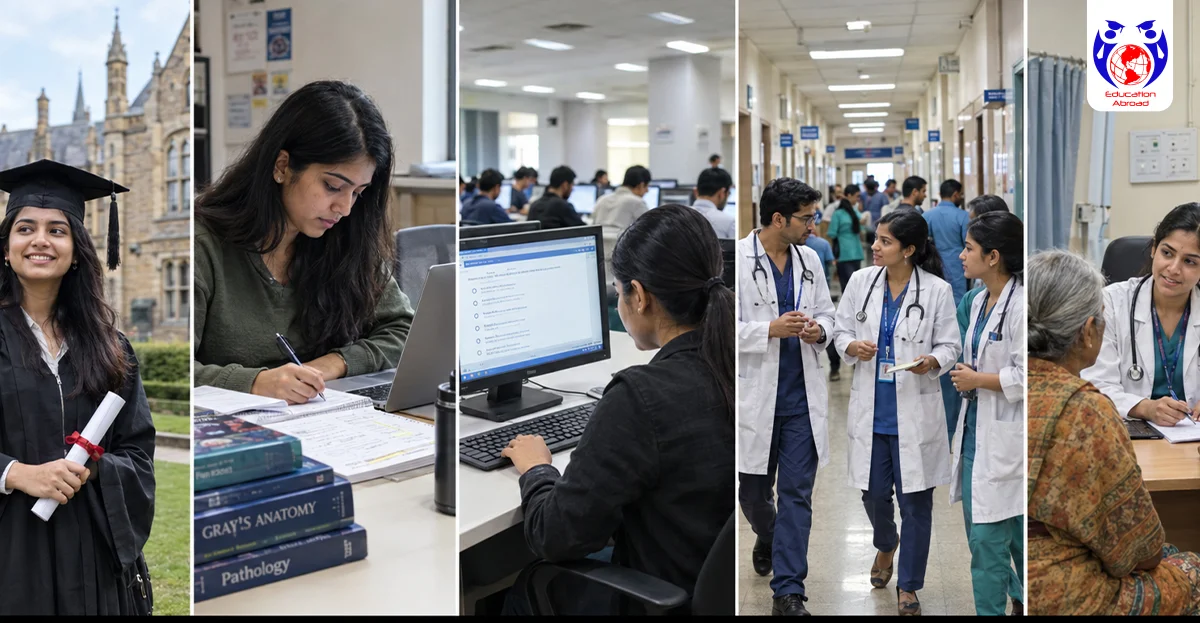
It is not easy for an Indian student to go abroad for his or her medical studies. In the first year of the MBBS course, Indian students studying abroad could see alterations in the way the student studies, communicates, and leads his or her daily lives. This would differ according to the country, institution, program structure, and individual student.
The issues faced by international medical students have been studied extensively before, and problems such as language difficulties, culture shock, social integration, and academic pressure have been identified, among others. This paper describes some of the common problems that a student faces when studying MBBS abroad.
The academic system of academics might be quite different from the one students have encountered in India. The modes of teaching, the format of the assessments, and expectations for individual study might differ in various universities. For students, it is necessary to handle:
Continuous preparation is important for medical education. Those who rely solely on classroom instructions might struggle with the curriculum. It will help if students create a weekly study schedule at the very beginning.
Even when learning in an English-speaking program, there will still be some problems with language in most cases. This is due to the need to communicate in the local language when shopping, traveling by public transport, or communicating with people outside the college.
When on clinical rotation, there will also be the need to communicate because at times there will be patients or healthcare providers speaking in their local language, accent, and medical terms.
Studies done among international medical students have indicated problems in relation to language, accent, and communication. It is for this reason that learning basic phrases in the local language will be important.
Every nation has its unique social etiquette, food culture, means of communication, and daily routines. Students may find such differences somewhat difficult to understand. The Life of international students may be connected with adaptation to:
Studies among international medical students found that cultural differences and difficulties in establishing intercultural friendships may form part of the adaptation process.
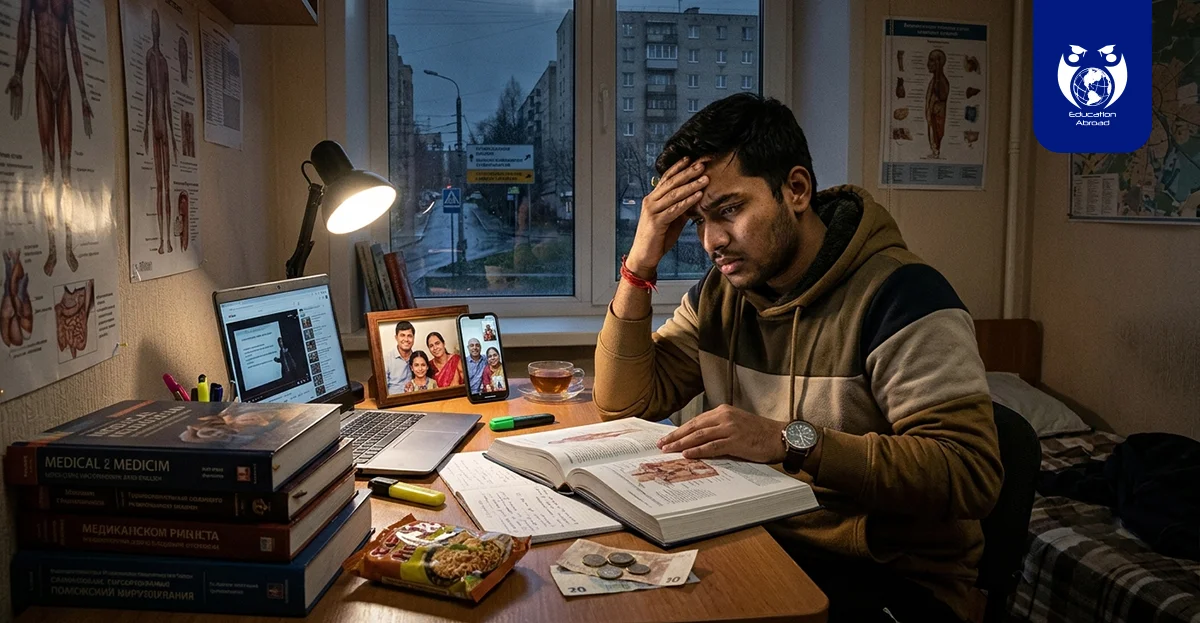
Moving away from home can be quite an emotional journey, especially when one misses their family back at home. This may involve missing the foods they grew up on, cultural festivities, friends, and the entire environment around them. Some students may also have problems with forming new social relationships.
There have been cases among international medical students where issues of loneliness, homesickness, and a sense of being misplaced in their new setting have emerged.
Living abroad also implies being responsible for one’s daily needs by oneself. It may take some time to get used to the local food, climate, and transport. Some of the tasks involved may be the following:
All the above-mentioned activities can be prepared for before leaving home.
Medical subjects need to be studied regularly rather than cramming. There might be lectures, practicals, labs, and individual study.
Having a practical timetable would certainly help. Students need to break up big subjects into manageable study objectives and revise regularly in order to have enough time to rest.
International studies have pointed out that overload and assessments could be obstacles to the academic adaptation of international medical students.
Meeting students from different countries can be an important part of the international experience. However, making friends may not happen immediately. Students can:
Social support can make it easier to manage cultural and academic adjustment. Research has also highlighted the value of peers, seniors, and academic staff in helping international students cope with challenges.
The student must know about the attendance policy of his/her university, examination schedule, academic policy, and the expectations of clinical training. He/she must also learn about the general structure of the healthcare system locally before he/she goes for clinical experience.
Regulatory requirements are yet another important consideration in the case of students from India. The National Medical Commission (NMC) recommends that the student should gather information about the course offered by the foreign university and then evaluate it on the basis of its contents, duration, and internship requirement.
Preparation should begin before departure rather than after reaching the university. Students can take these practical steps:
First-year MBBS abroad might just become the most challenging year for Indian students studying abroad for overseas education. Academics, language, culture, homesickness, and living alone can be a bit overwhelming to adapt to initially. Nevertheless, this does not mean at all that pursuing MBBS would not suit the purpose.
Being well prepared can help with this. In fact, before joining any MBBS program, the student should conduct an extensive evaluation of the university, country, curriculum, language, practicals, and NMC norms, among other things.
Common challenges include adapting to a new academic system, language barriers, cultural differences, homesickness, and managing daily life and academic pressure.
The first year can be challenging because students must adjust to a new country, teaching system, and lifestyle. Proper preparation can make the transition easier.
Yes. Even when the course is taught in English, basic local-language skills can help students communicate in daily life and become more comfortable during clinical exposure.
Regular communication with family, building friendships, joining student communities, and participating in university activities can help students manage homesickness and social adjustment.
Students should research the university, understand its curriculum and assessment system, learn basic local language, prepare for independent living, and build a reliable support network before travelling.