Summarize This Article With AI
Moving to another country for higher education is exciting, but the first few months decide how comfortable the next five to six years will feel. Beyond lecture halls and lab hours, student life abroad is shaped by four everyday realities: where you sleep, what you eat, how cold the winter gets, and how protected you feel walking back to campus at night.
Most families spend weeks comparing tuition fees and rankings, yet very few sit down and ask how a first-year student will actually live on a daily basis. If you are still shortlisting destinations, our guide on choosing the right country for medical studies is a useful starting point before you read further. This article breaks down accommodation, food, weather and personal security in plain terms, so you know what to prepare for long before your flight is booked.
Almost every foreign medical university offers on-campus accommodation, and for a first-year student it is usually the safest and most affordable option. A typical MBBS abroad hostel room is shared between two or three students, comes furnished with a bed, study table, wardrobe, and heating, and sits within walking distance of the academic block.
What you should verify before accepting a room:
Senior students sometimes shift to rented flats in the second or third year. Rent is split between three or four friends and works out close to hostel cost, but you take on utility bills, local registration formalities and a longer commute. For the first year, stay in the hostel. It is the fastest way to build a support circle, and university security is directly accountable for you.
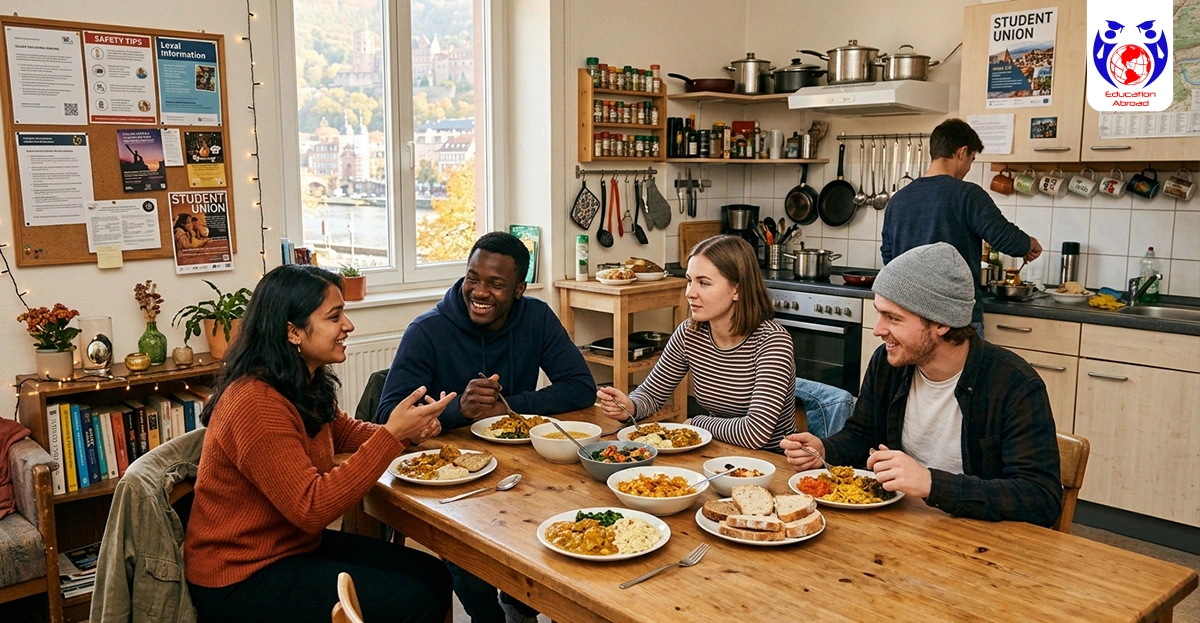
Food is the single most common adjustment complaint among Indian students abroad, and also the easiest one to solve. Most university towns with a large Indian student population now have Indian messes run by contractors or by student associations, serving roti, dal, rice and sabzi twice a day at a fixed monthly charge.
|
|
|
|
|
|
|
|
|
|
|
|
|
|
|
|
Practical tips: carry a small pressure cooker, a few spice packets, and a basic masala box in your first suitcase. Indian grocery stores exist in most medical university cities, but stock and pricing vary. Vegetarian and Jain students should confirm mess availability with the university before admission rather than after arrival; this one check has saved many families a great deal of stress.
Many popular destinations experience winters between −10°C and −25°C, with daylight ending by 4 p.m. in December and January. This is a genuine shift for students from southern and western India, but it is manageable with the right preparation.
A smooth MBBS abroad experience often comes down to small habits: layering correctly, staying hydrated indoors, and not skipping meals during exam season.
Reliable study abroad safety rests on structure, not luck. Reputable universities operate gated campuses, 24×7 security staff, CCTV coverage in hostel corridors, and biometric or ID-card entry. Registration with the Indian Embassy or Mission in your host country is strongly recommended within the first month, and the MADAD portal handles consular grievances.
Everyday habits that matter:
Before finalising any university, confirm that it appears on the World Directory of Medical Schools and complies with current NMC regulations, so your degree is recognised when you return to India.
A rewarding student life abroad is built on preparation, not chance. A well-managed hostel, dependable Indian food, weather-appropriate clothing and a campus with genuine security cover will do more for your academic performance than any brochure promise. Speak to current students, ask specific questions about mess timings and heating, and verify every claim independently. If you are ready to compare institutions in detail, review our university-wise fee and facility comparison before making a decision.
Need help shortlisting a university that matches your budget and comfort? Our counsellors at Education Abroad guide students through accommodation, documentation, and pre-departure planning. Get in touch for a free consultation.
Most universities require first-year international students to stay in campus hostels for safety and administrative reasons.
In universities with a large Indian student base, yes, Indian messes typically operate on campus or nearby. Always confirm before admission.
In Russia and Central Asia, winter temperatures commonly fall to −20°C, though hostels and academic blocks are centrally heated.
Yes, provided you choose a gated campus with separate girls' hostels, warden supervision and CCTV coverage